
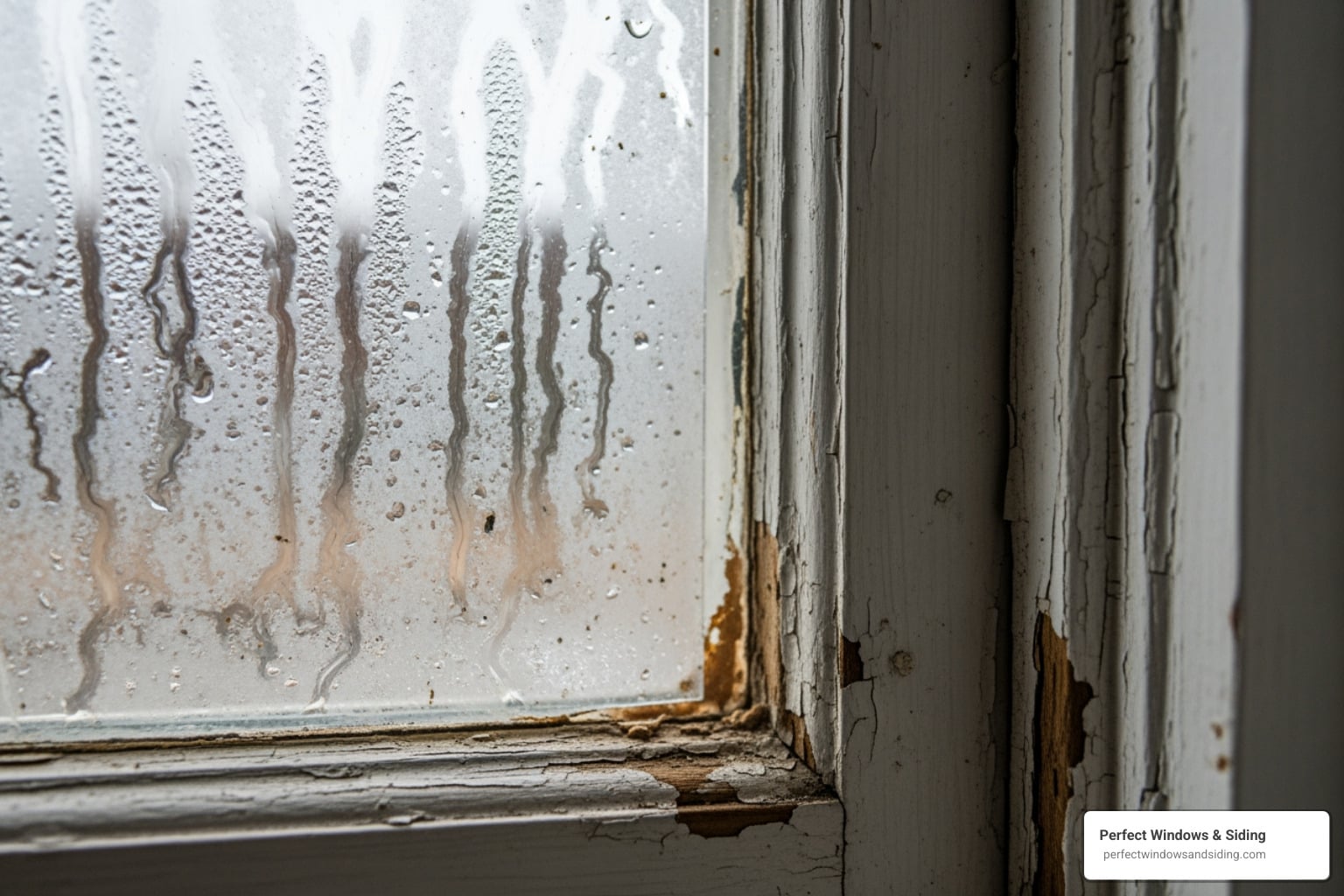
Repair makes sense when the problem is small, local, and the rest of the window is in good shape, such as a worn lock, a torn screen, or a failed weatherstrip. Replacement makes sense when the damage is structural, the glass seal has failed, or the window is old enough that fixing one part just delays the next problem. The right call depends on what is actually wrong, how many windows are affected, and how long you plan to stay in the home.
Start With the Real Problem, Not the Symptom
A drafty window, a window that sticks, and a window with moisture between the panes can all look like “a bad window.” But they have very different causes and very different fixes.
Before comparing costs, figure out which of these you are dealing with:
- A hardware problem: a broken lock, a worn balance, a cracked handle, or a crank that slips.
- A seal problem: worn weatherstripping, dried-out caulk, or gaps around the trim.
- A glass problem: a crack, a chip, or a sealed glass unit that has fogged between the panes.
- A frame problem: soft or rotted wood, warped vinyl, corroded metal, or a frame that has shifted out of square.
- An age and efficiency problem: single-pane glass or old double-pane units that never performed well to begin with.
The first two are usually repair territory. The last two usually point toward replacement. Glass problems fall in between.
When Repair Is Usually Enough
Repair is often the sensible, lower-cost choice when the window is otherwise sound. Good candidates include:
- Worn weatherstripping or failed caulk. These are inexpensive to redo and can noticeably reduce drafts.
- Broken locks, latches, or cranks. Replacement parts are often available for common window styles.
- A single cracked pane in an otherwise healthy window. If the frame is solid, the glass can often be replaced on its own.
- A sticking sash caused by paint buildup or dirt in the tracks. Cleaning and lubricating may be all it needs.
- One isolated problem in a newer window. If the window is young and may still be under a manufacturer warranty, check that first.
The guiding question is simple: if I fix this, will the window be in good shape for years? If yes, repair is reasonable.
When Replacement Is Usually the Better Choice
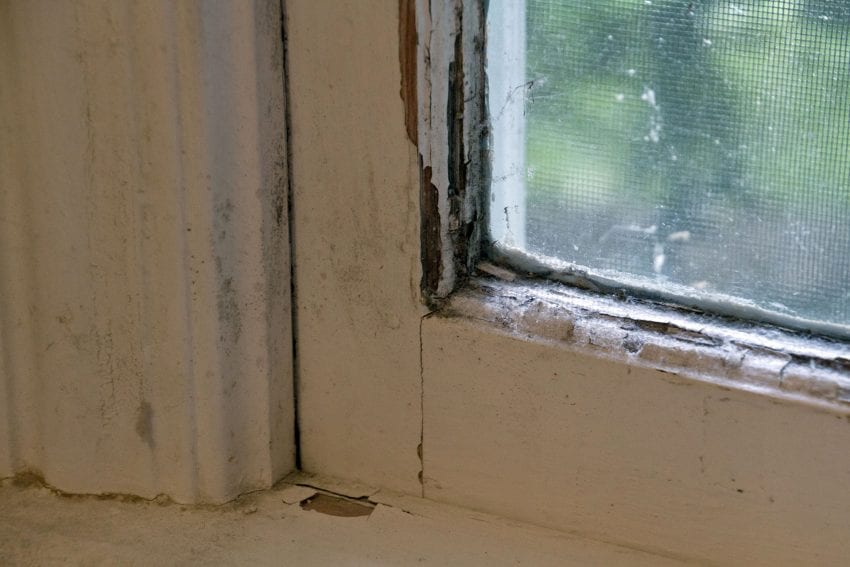
Repair stops making sense when you are paying to patch a window that is failing in several ways at once. Replacement is usually worth a serious look when you see:
- Rot or soft spots in the frame or sill. If you can press a screwdriver into the wood, the damage is not cosmetic. Water has been getting in, and patching over it rarely lasts.
- Warped, cracked, or bowed frames that no longer close tightly.
- Fogging or condensation between the panes in several windows, which means the seals have failed.
- Drafts that return after caulking and weatherstripping. That suggests the problem is the window itself, not the gaps around it.
- Windows that are painted shut, hard to open, or unsafe to use as an emergency exit.
- Single-pane or very old windows that leave rooms uncomfortable no matter how you adjust the thermostat.
- Repeated repairs. If you have called for the same window more than once, the next repair is probably not the last.
Our guide to signs it’s time to replace your windows goes through these in more detail.
A Middle Option: Replacing Just the Glass
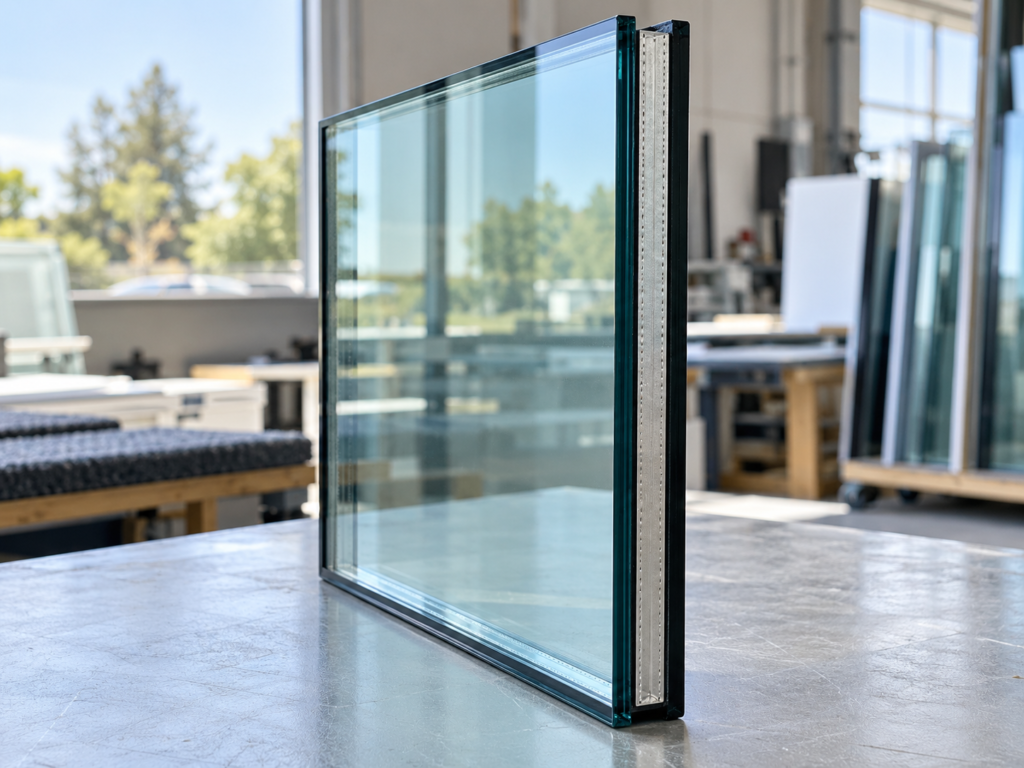
If a window has fogged glass but the frame is solid and operates well, replacing only the sealed glass unit can be a reasonable middle path. It costs less than a full window and keeps the existing frame.
It does have limits. A new glass unit does not fix a tired frame, worn hardware, or an old frame that leaks air. If you are replacing glass in many windows, it is worth comparing that total against full replacement. Our page on window glass replacement explains how this option works, and our guide to foggy windows: repair or replace covers how to decide.
Repair vs Replacement at a Glance
| Situation | Repair usually makes sense | Replacement usually makes sense |
|---|---|---|
| Worn weatherstripping or caulk | Yes | Only if drafts continue afterward |
| Broken lock or handle | Yes, if parts are available | If the window is old and has other issues |
| Single cracked pane, sound frame | Yes | If the window is old or inefficient |
| Fogged glass, sound frame | Glass-only replacement may work | If many windows are fogged or the frame is aging |
| Rotted or warped frame | Rarely a lasting fix | Yes |
| Single-pane windows and comfort complaints | Limited improvement | Yes |
| Repeated repairs on the same window | Cost keeps adding up | Usually yes |
How to Compare the Real Costs
A repair that costs less today is not always cheaper over time. To compare fairly, think about three things:
- What the repair fixes and what it doesn’t. Ask whether the repair addresses the cause or only the symptom.
- How many windows need work. Three or four separate repairs can start to approach the cost of replacing those windows.
- What you gain beyond the fix. Replacement can improve comfort, ease of operation, and efficiency. Repair mostly returns a window to how it was.
For reference, most replacement windows from Ares run roughly $650 to $1,400 installed, depending on size, style, and package. Our window replacement cost guide breaks down what drives that range. Financing starts as low as $49 per month with 0% options, subject to credit approval, which can make replacing several windows at once more manageable.
Questions to Ask Before You Decide
- How old are the windows, and how many have problems?
- Is the problem in the frame, the glass, or just the hardware?
- Have I already repaired this window before?
- Do I plan to stay in this home long enough to benefit from new windows?
- Are rooms uncomfortable, noisy, or drafty even when windows are closed?
If most of your answers point to widespread age and wear, replacing is likely the better long-term investment. If the issue is one fixable part in an otherwise solid window, repair is probably enough.
Get a Second Opinion Before You Spend Anything
Both repair and replacement are legitimate answers, and the honest one depends on your actual windows. A good estimator should look at the frames, test operation, and explain why they recommend one path over another. If you are weighing companies, our guide on how to choose a window company covers what to ask. Ares Windows serves Indianapolis, Utah, and the Raleigh area; see all service areas.
Ready to Compare Your Options?
If you are not sure whether your windows can be saved, we can help you sort it out. Ares gives an itemized quote at the first visit with no inflated list price, and most homes are installed in one day. Request your free quote and see what replacement would cost for your home.
Frequently asked questions
Is it cheaper to repair or replace a window?
Repair is usually cheaper up front for small problems like hardware, weatherstripping, or a single cracked pane. But if the frame is damaged or several windows need work, replacement can be the better value over time.
Can fogged windows be repaired?
Fog between the panes means the seal on the glass unit has failed. Sometimes the glass unit alone can be replaced if the frame is in good shape. If the frame is old or damaged, full replacement is often the more lasting fix.
Will caulking and weatherstripping fix a drafty window?
It can, if the draft is coming from worn seals or gaps around the trim. If drafts continue after resealing, the window itself may be worn out or out of square.
How do I know if window rot is too far gone to repair?
Soft wood that gives under pressure, damage that has spread beyond a small spot, or rot near the bottom of the frame where water collects usually means repair won’t last. A professional should inspect it.
Should I replace all my windows at once or just the worst ones?
It depends on your budget and the condition of the rest. Replacing all at once gives a consistent look and can be more efficient to install, while phasing the work can spread out the cost. An itemized quote helps you compare both approaches.
Keep reading

Alside Mezzo vs Pella 250 Windows: How They Compare
Both are vinyl replacement windows, so the real differences come down to glass options, warranty terms, who installs them, and the quote you are given.

Alside Mezzo vs Andersen 100 Series: Which Is Better?
A fair, homeowner-friendly look at how the Alside Mezzo vinyl window and the Andersen 100 Series composite window compare, and how to decide between them.
Window Replacement Cost in Lehi, Utah (2026 Guide)
Most replacement windows in Lehi run roughly $650-$1,400 installed, and this guide explains what moves a quote up or down.